
Fringe Repair & Custom Re-Dyeing
The fringe of a handmade rug is its structural foundation—the termination points of warp nodes holding the entire weave in place. Our master weavers execute microscopic structural re-weaving and native vegetable dye matches to stop unraveling, preserve pile density, and bring brilliant heritage color back to your antique investments.
Certified Weavers
Master artisans with 30+ yrs experience
Organic Pigments
100% vegetable-dyed wool matches
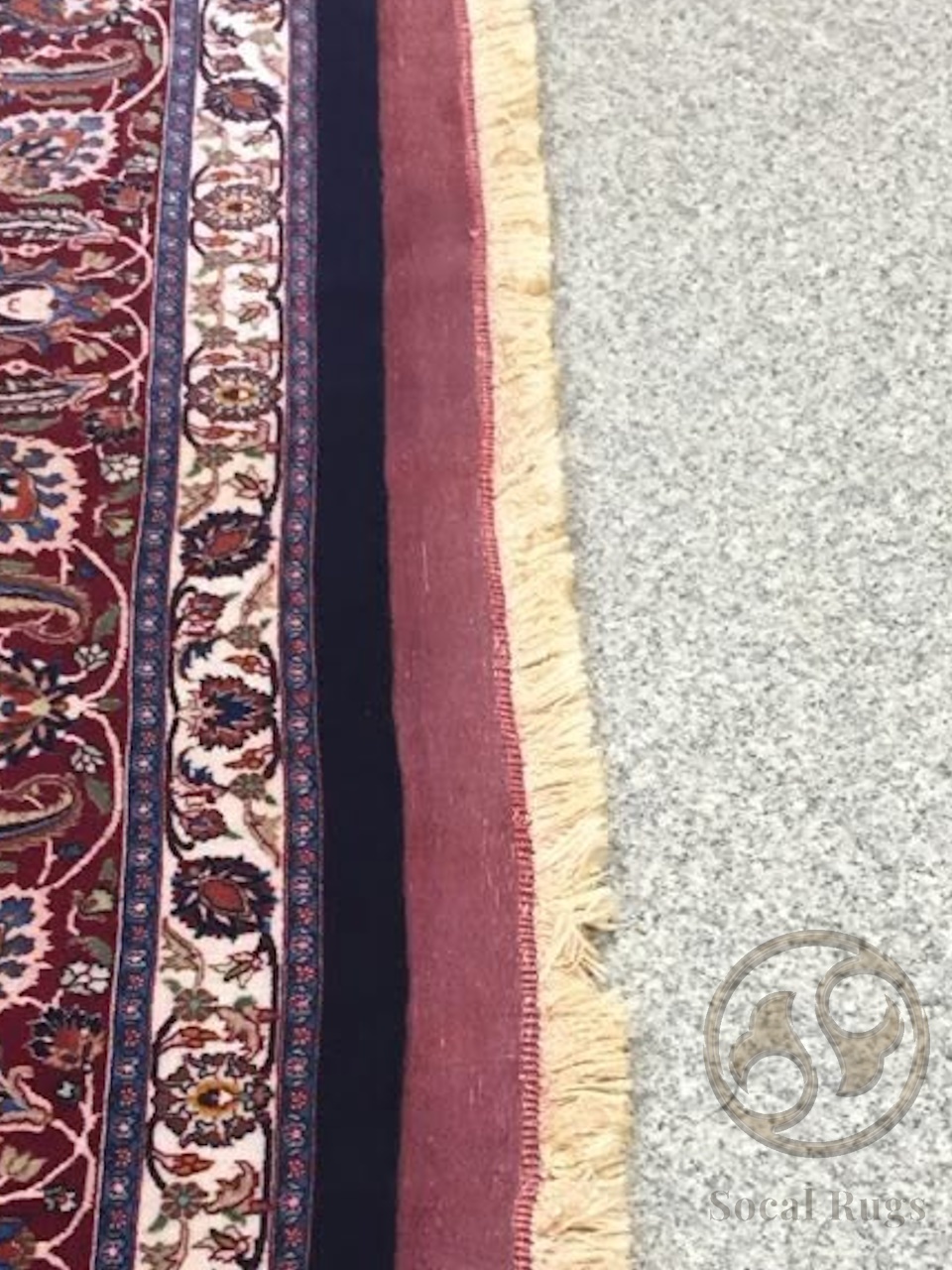
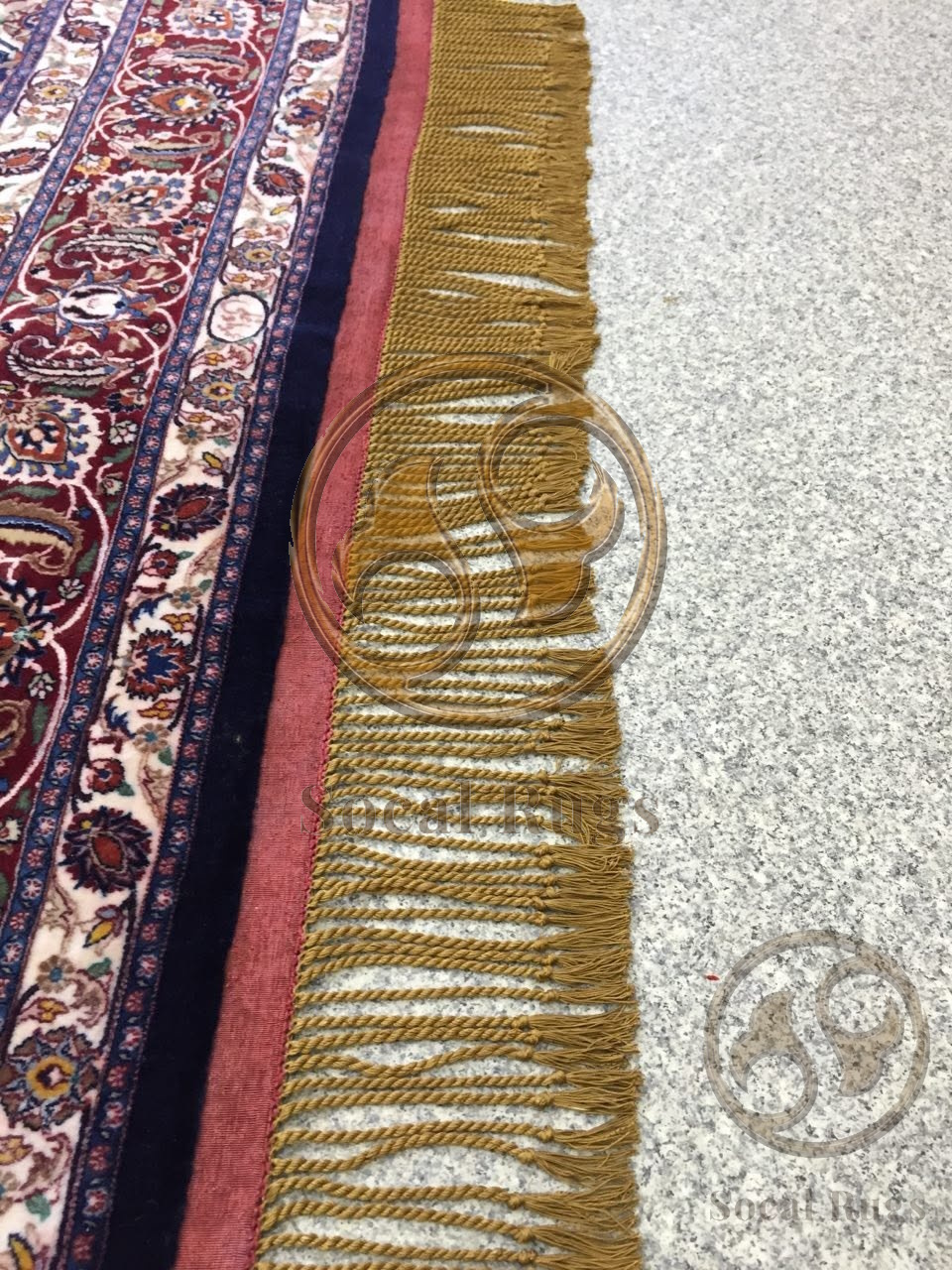
Fringe Reconstruction
Watch the precision required to rebuild a destroyed edge. From anchoring new warp threads deep into the foundation, to hand-weaving the new base, and finally executing a clean, level fringe line.
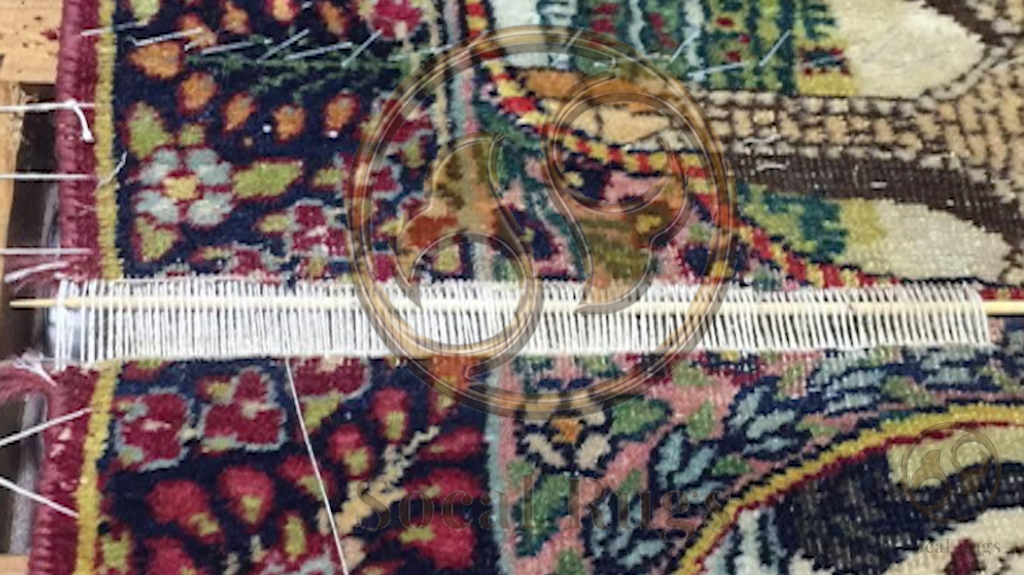
Foundation Anchoring
We insert heavy-gauge loom needles deep into the intact rug body, pulling fresh cotton warp threads through to establish a structural base that won't tear out.
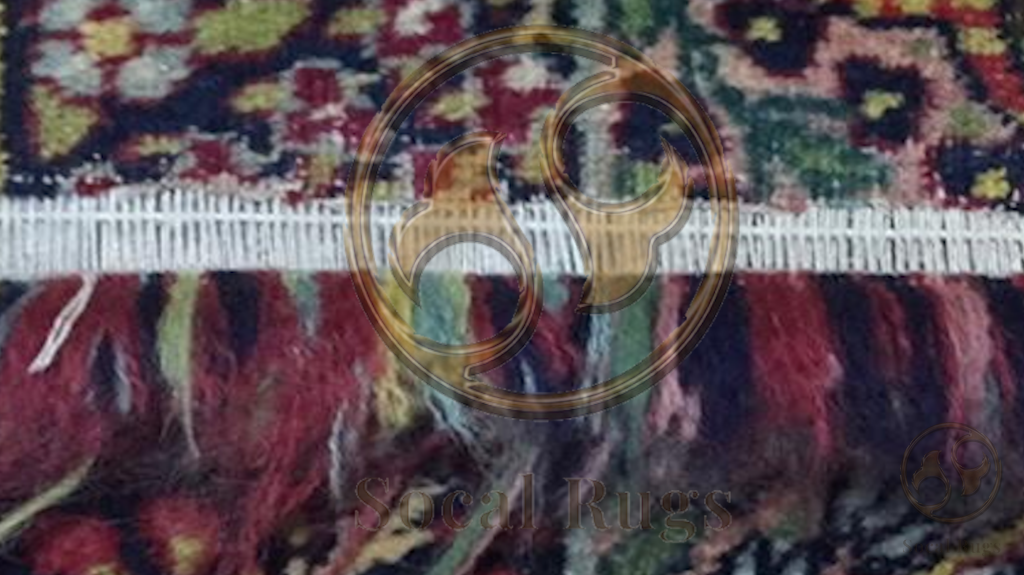
Header Weaving
Using the newly established warps, we hand-weave a tightly packed kilim header, securing the existing pile knots so they can never slide off the edge again.
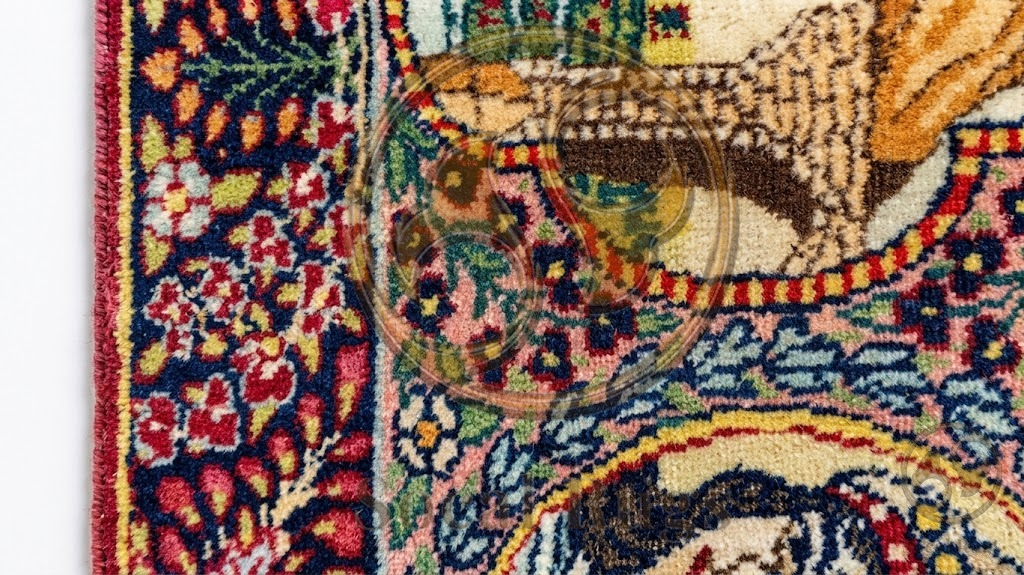
Precision Finish
The excess threads are combed, tensioned, and sheared to a perfectly level margin, resulting in a flawless factory-grade edge reconstruction.
Restoring the Foundations of History
Fringes are not mere visual additions; they are the physical continuation of the vertical warp threads running through the core of your rug. When fringes are damaged by vacuums, foot traffic, or pets, the delicate knot structures immediately slide loose. Left neglected, whole rows of pile knots fall away—resulting in irreversible damage and dramatic valuation drops.
We treat fringe repair as an exact fine art. Our master weavers re-knot, lock, and whipped-bind the perimeter structure to fully stabilize the canvas. By matching the geographic origin, spinning direction, and color chemistry of the original antique fibers, we ensure every restoration blends invisibly under professional scrutiny.
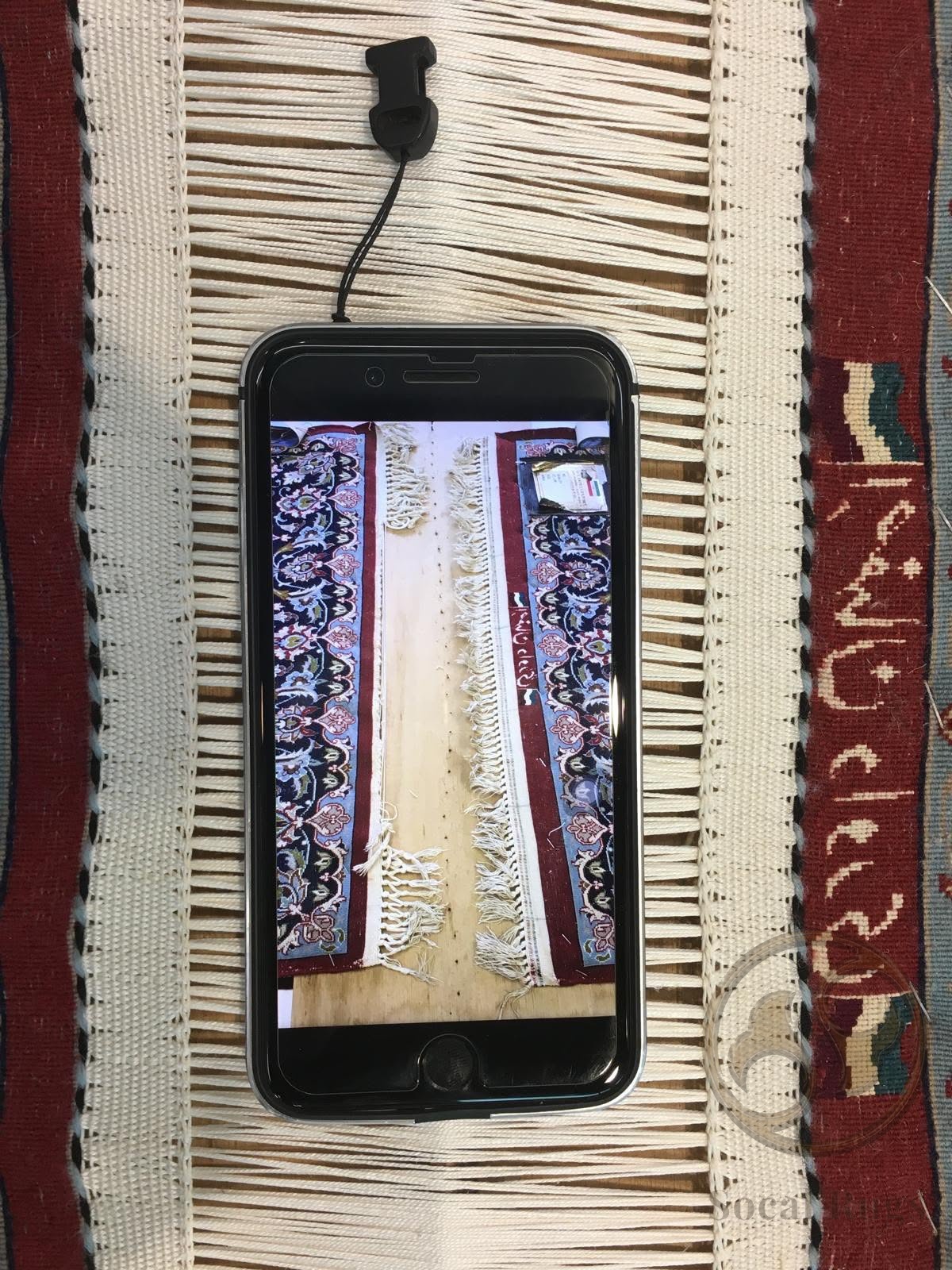
Completed Masterpiece Flat Lay
Finished combing and hand-weaving execution demonstrating double perimeter overcast locking on separated oriental runs.
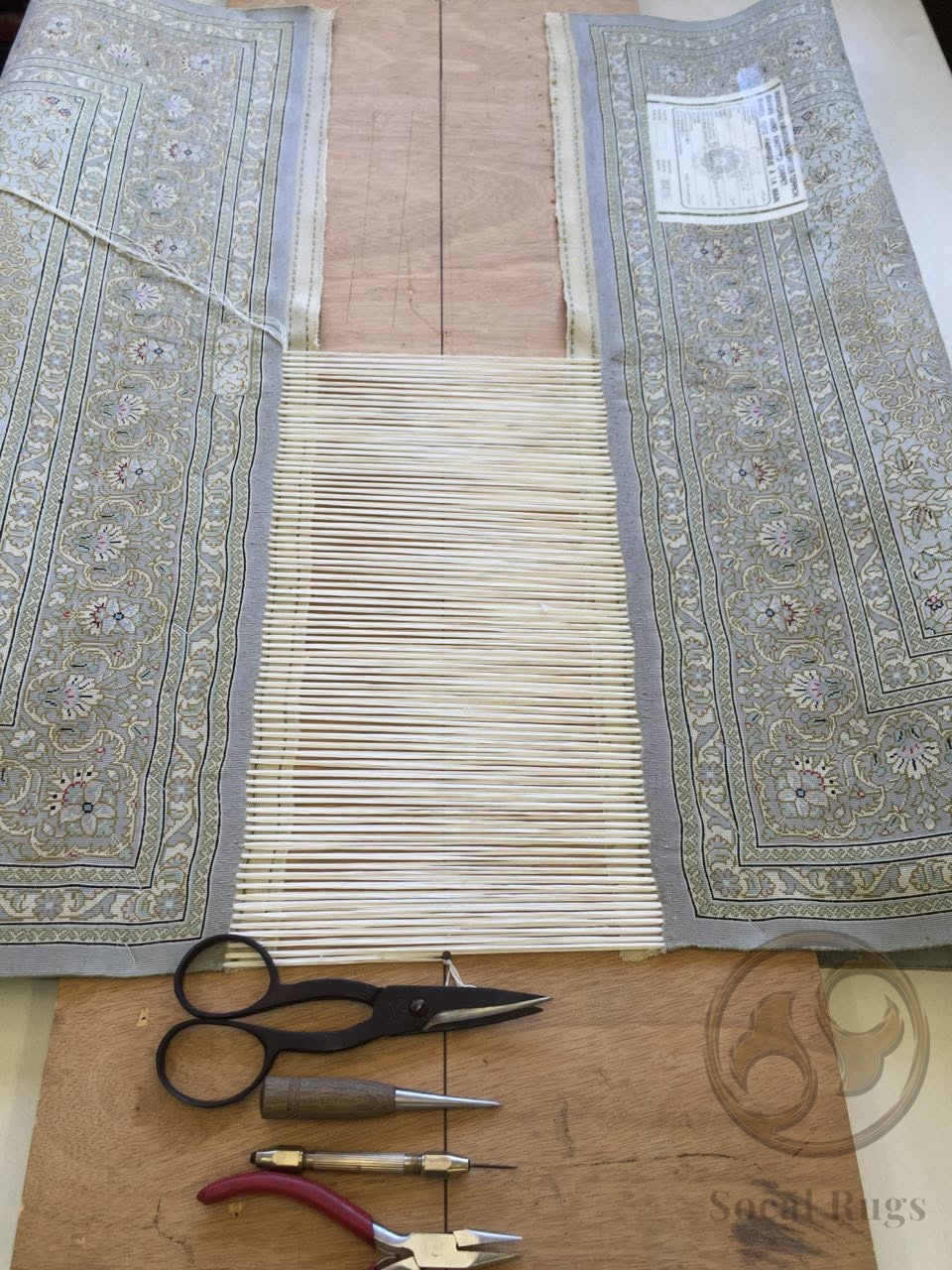
Case 1: Dual Split Rug Fringe Recreation
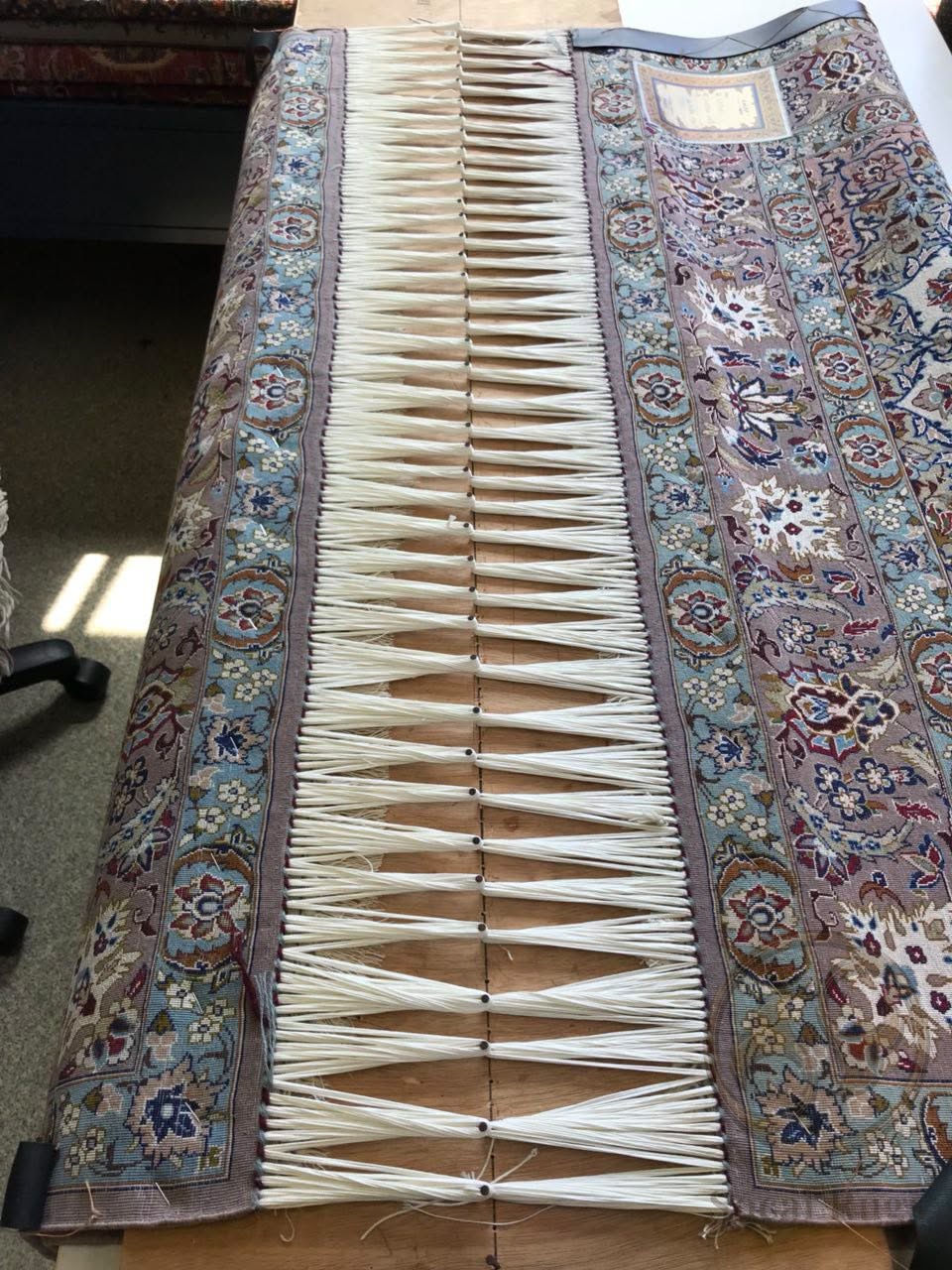
Examine the micro-precision of a master artisan splitting a dual-weaved silk floral rug, exposing the core warp lines, and knotting two independent combed margins.
Case 2: Active Loom Warp Reconstruction
Observe the technical mastery of reconstructing complex foundation threads under active cylinder tension on a traditional vertical rug loom.
Precision Under High Cylinder Tension
When an antique red medallion rug loses its original cotton fringes due to rot or wear, the entire edge must be placed on a heavy wooden tension cylinder loom. Splicing into the existing pile knots, our master weavers rebuild the warp threads under perfect industrial tension, preventing the carpet from puckering.
-
Tension Loom Integration
Tying warp lines to structural loom cylinders prevents bunching and guarantees a straight finish.
-
Double Knot Warp Splice
New structural lines are woven 2 inches deep into the rug pile, securing the margin knots.
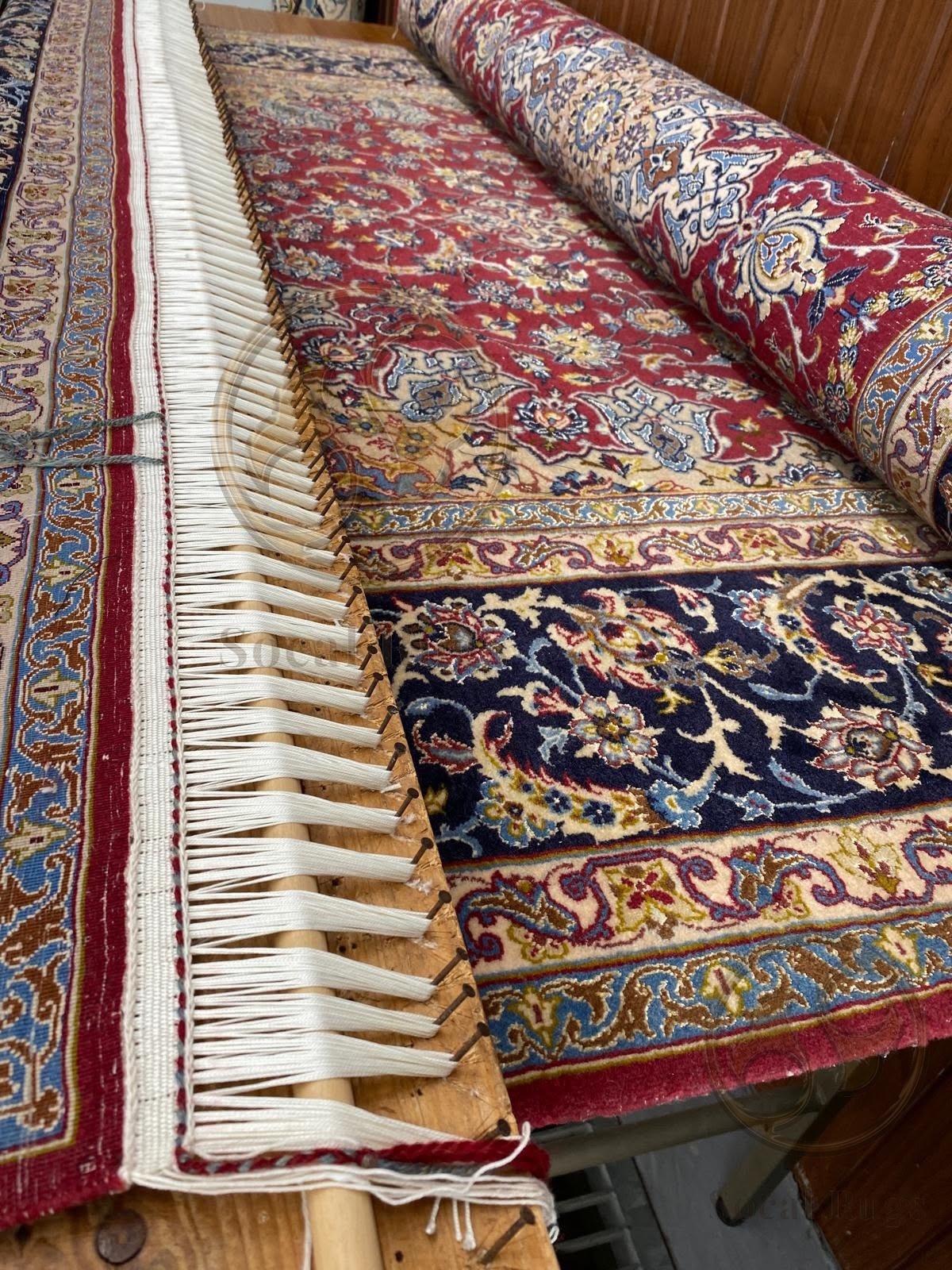
Active Rebuilding Phase
The red floral medallion rug is tensioned on the cylinder loom, showing fresh white structural warp threads anchored to the frame.
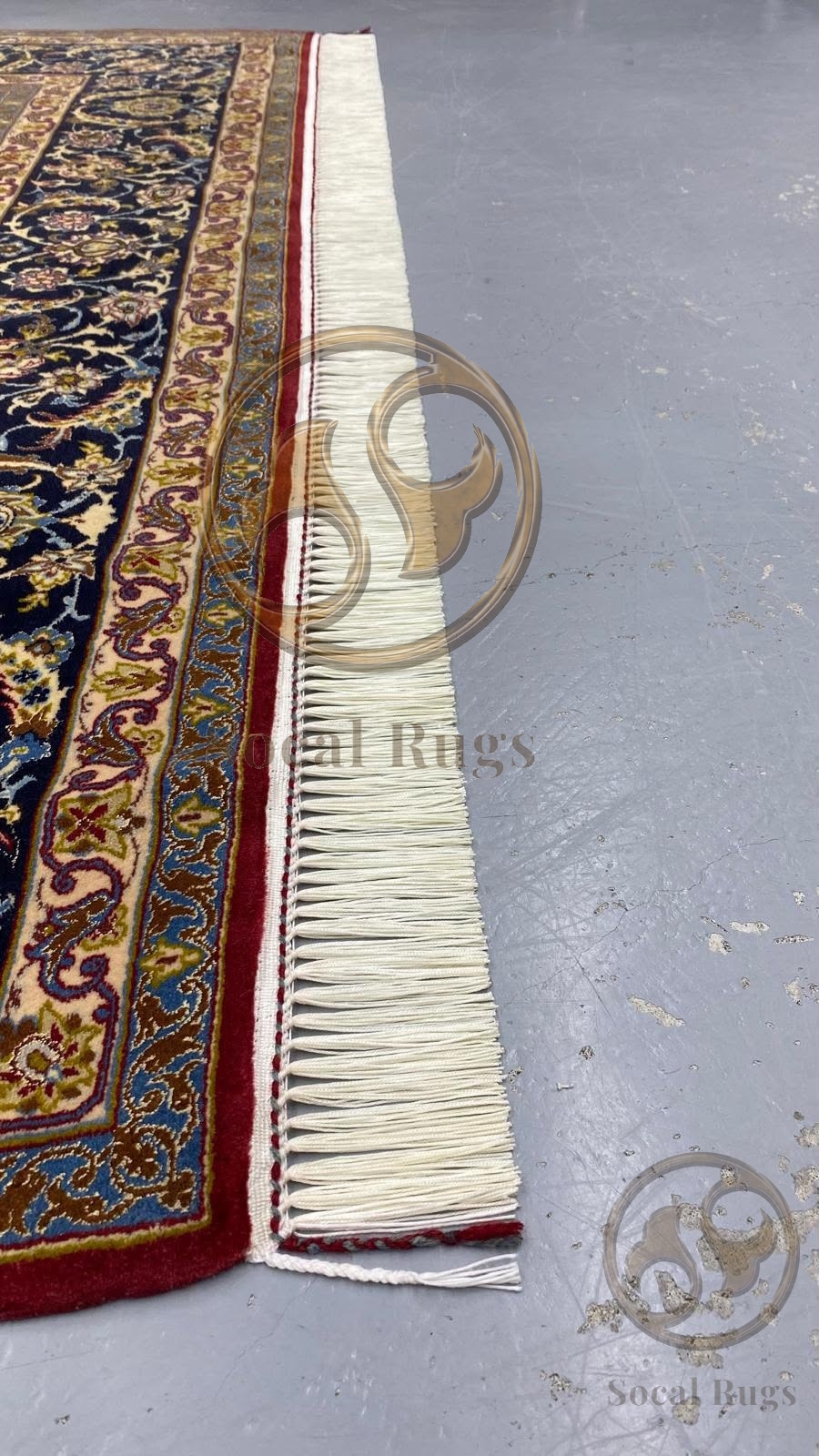
Pristine Completed Flat Lay
Side-angle view of the finished combed fringe flat on the workshop floor, showing straight boundaries and beautiful density alignment.
Case 3: Fringe & Kilim Edge Reconstruction
Follow the step-by-step masterwork of rebuilding unraveled edges and structural borders.
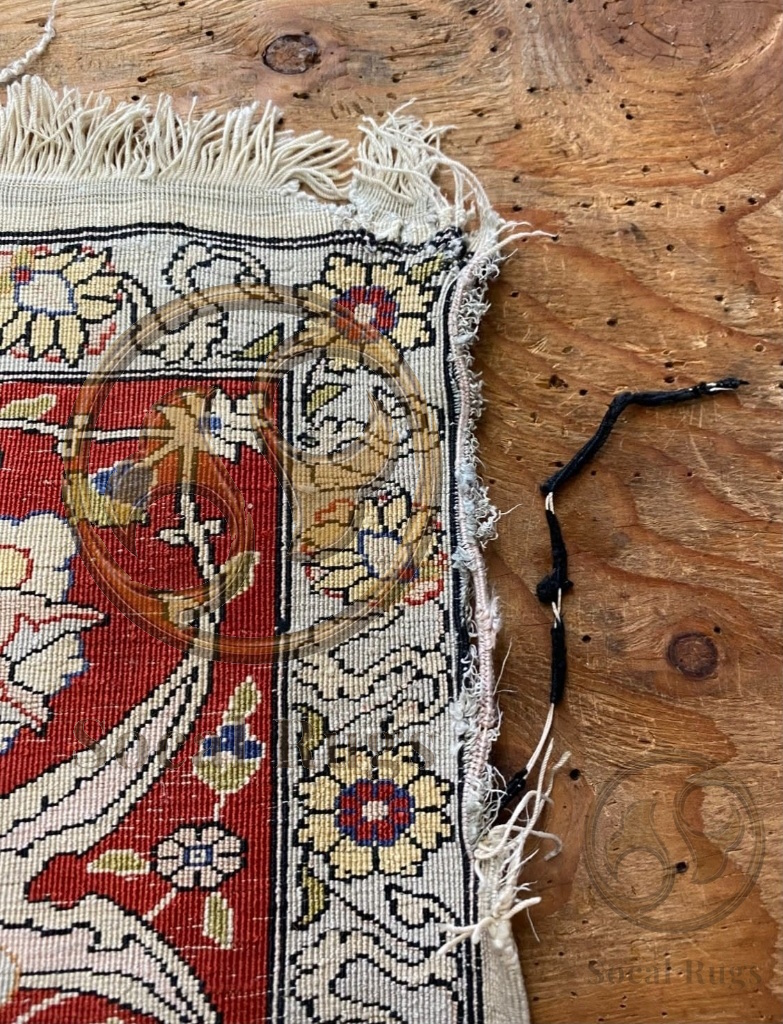 01 / Damaged
Initial Damage
The protective edge cords and fringes have completely disintegrated, leaving the foundation warp threads raw and exposing the hand-knotted pile knots to unraveling.
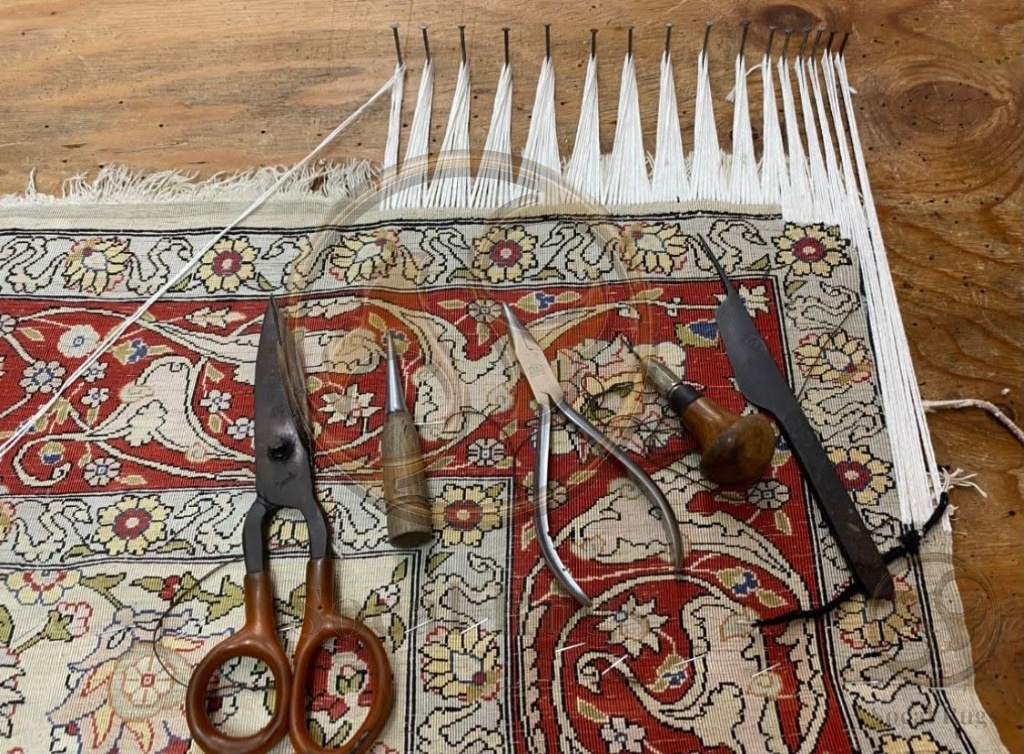 02 / Tension
Warp Alignment
We mount the rug and tension new white warp cords over specialized steel alignment anchors, preparing the structural grid under balanced vertical tension.
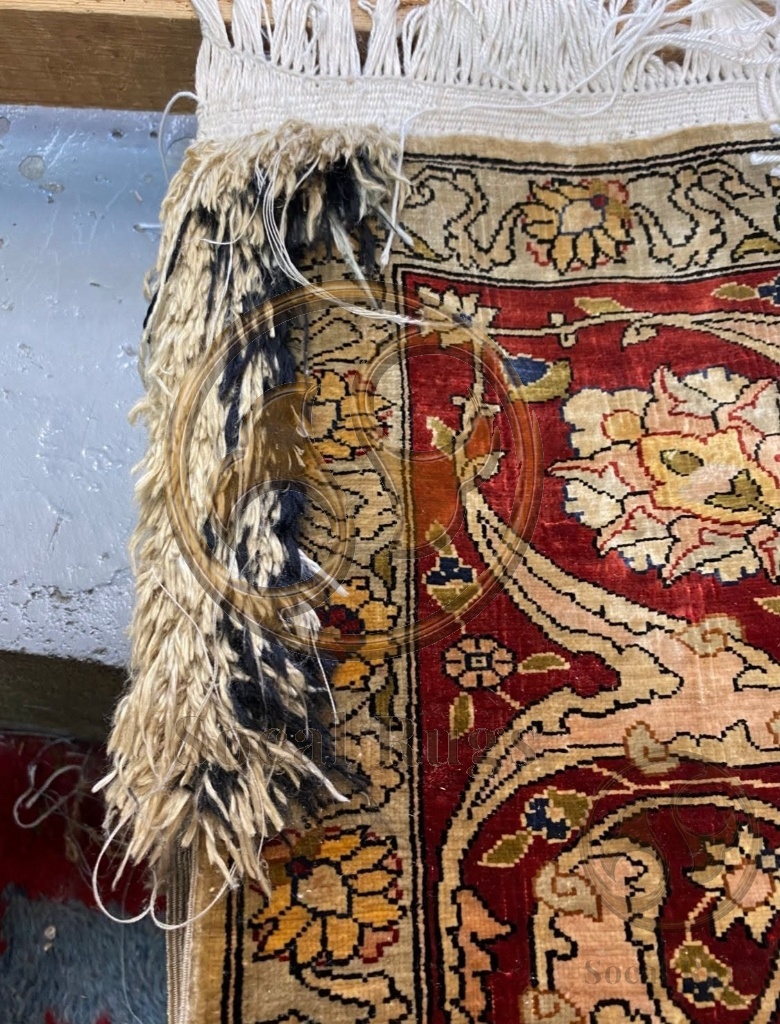 03 / Weaving
Kelim Loop Building
Our master weaver hand-stitches and weaves native wool loops back into the exposed foundation of the rug's selvedge, rebuilding the flat-weave margin.
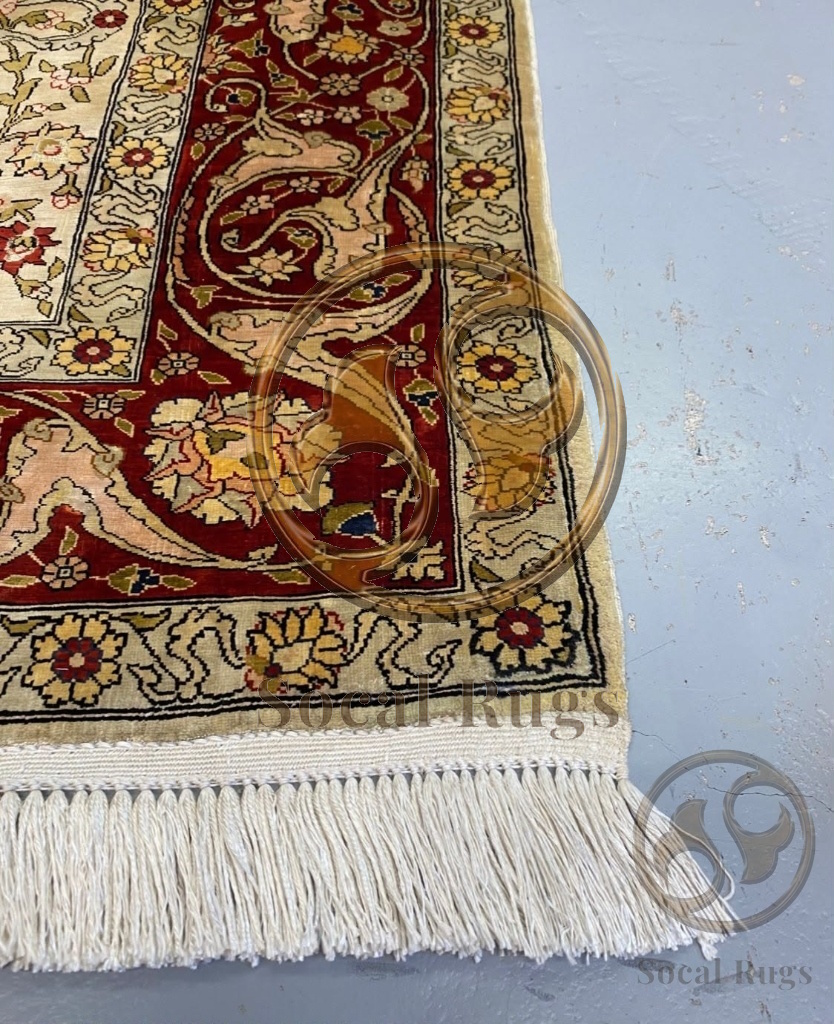 04 / Completed
Restored Border
The finished masterpiece. Fringes are perfectly secured and combed, the side edges are overcast bound, and the structural integrity is fully locked.
Case 4: Kilim & Flat-Weave Hole Restoration
Examine how our master weavers repair a large hole in a flat-weave kilim, reconstructing the warp foundation and re-weaving the design.
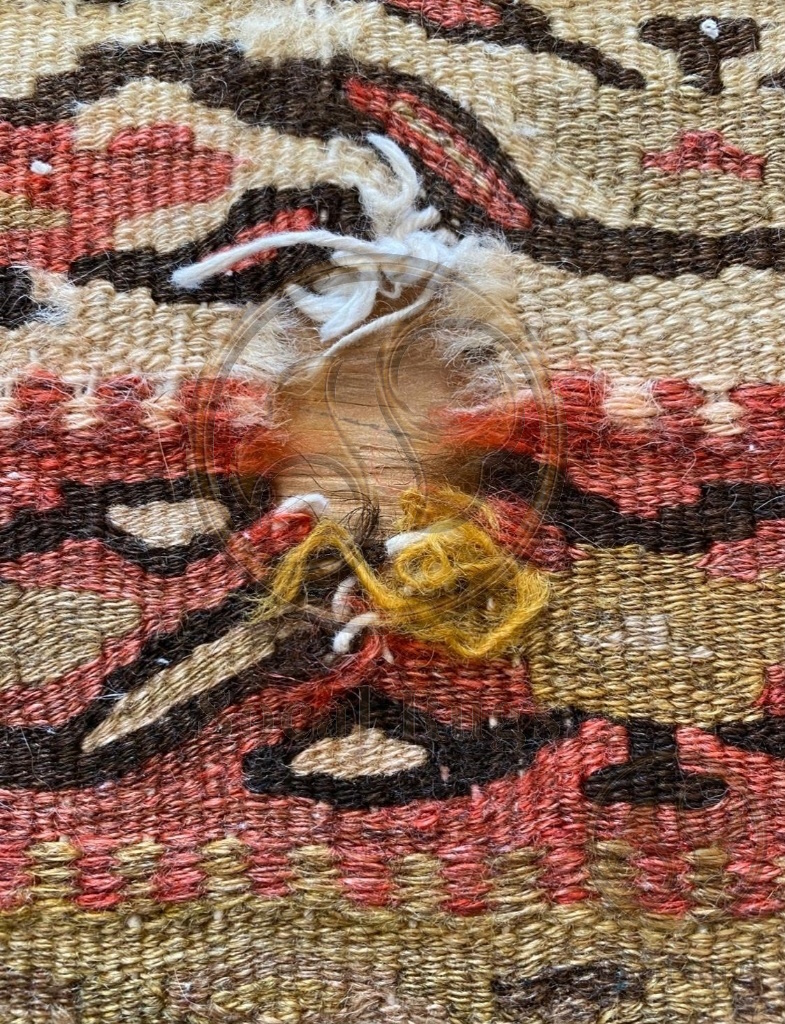 01 / Damaged
Severed Foundation
A severe tear has punctured the body of the kilim, completely severing the load-bearing warp foundation and surrounding design threads.
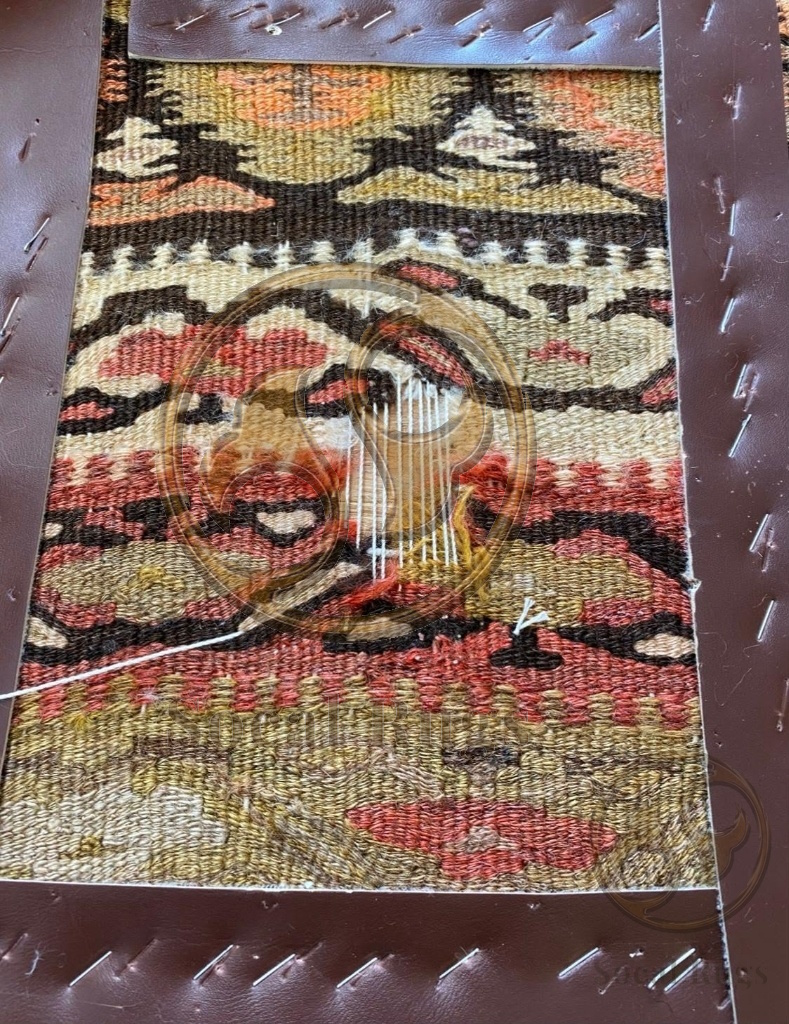 02 / Re-Warping
Warp Reconstruction
We secure the rug on a precision frame and rebuild the vertical warp foundation lines, anchoring them deep into the stable surrounding weave.
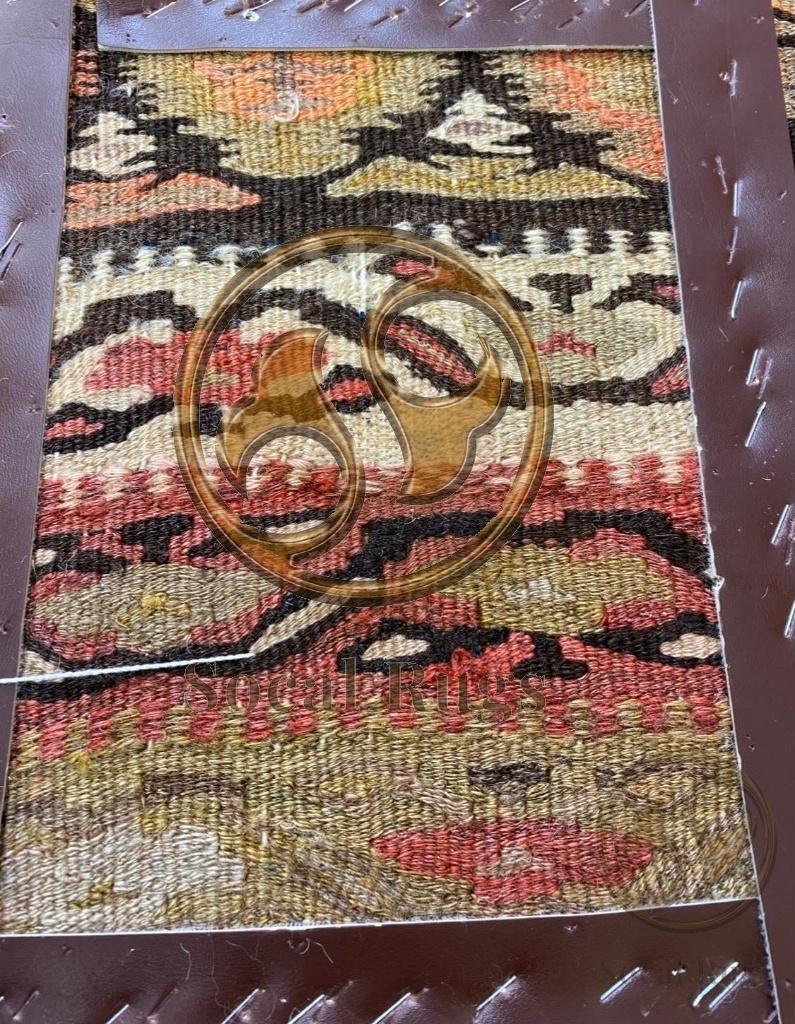 03 / Completed
Finished Re-Weave
The final result. Using custom-matched vegetable-dyed wools, the design is woven back into the reconstructed warp grid, restoring structural integrity.
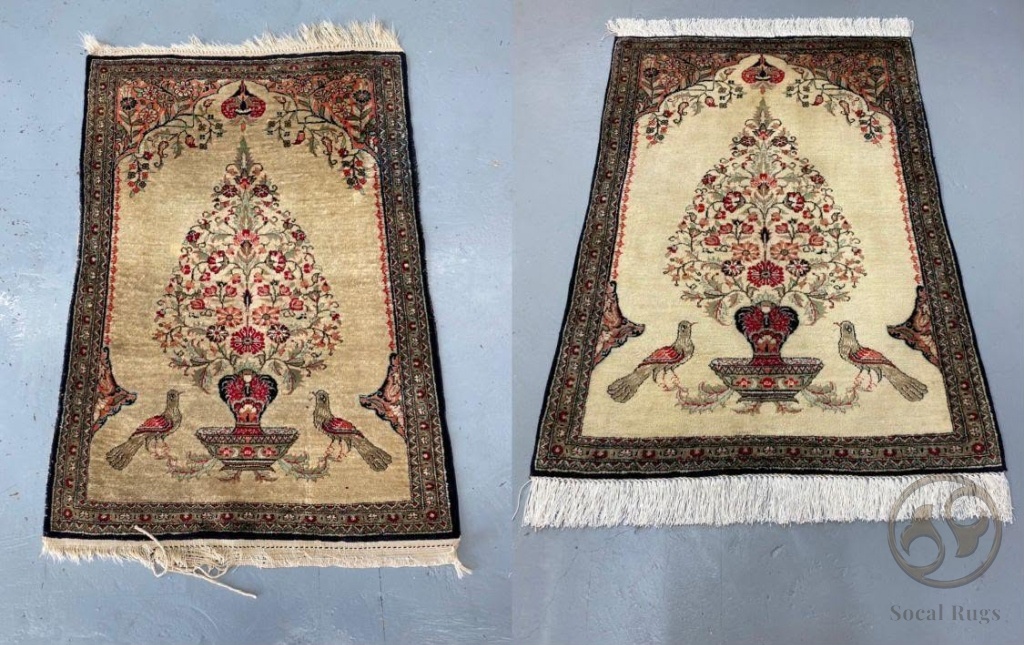
Tree of Life Fringe Reconstruction
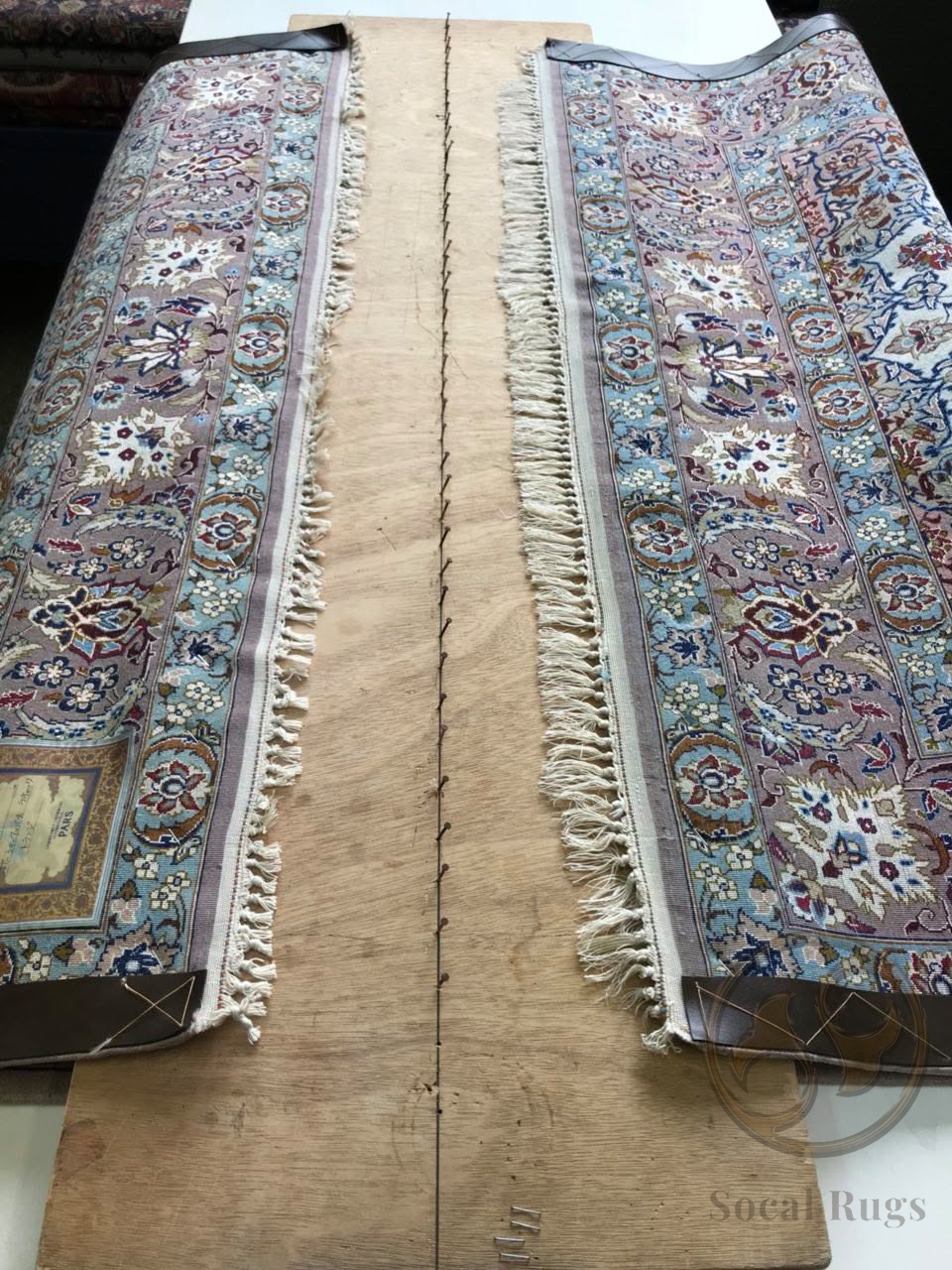
This side-by-side comparison highlights the restoration of a damaged antique prayer rug. The unraveled, shredded fringes on the left were completely secured, rebuilt, and combed into the straight, pristine tassels shown on the right—fully locking the rug's structural foundation and preventing knot slippage.
Our Masterwork Protocols
We deploy three discrete premium methods customized to your rug’s age, style, and value.
Bespoke Warp Re-weaving
For fine Persian and Oriental masterpieces. We weave new warp threads deep into the active rug foundation, recreating the original fringe entirely by hand.
- Exact pile density replication
- Imported wools & raw silk fibers
- Best for: Tabriz, Kashan, Kerman
Overcasting & Whipping
Ideal for runners, flat-weave kilims, and modern rugs. We wrap active edge lines in heavy-duty custom wools to seal perimeter borders and prevent unravelling.
- Hand-sewn whipping boundary seal
- Sleek, low-profile edge protection
- Best for: Runners, Kilims, Turkish Kilims
Organic Dye Saturation
Correcting faded, chemical-bleached, or sun-damaged fringes. We brew custom batches of natural madder root, indigo, and walnut husks to color-match antique tones.
- 100% organic vegetable pigments
- Microscopic dye matching comparison
- Best for: Sun bleaching, bleach burns
The Five-Step Atelier Standard
How our master weavers handle each structural and cosmetic fringe rejuvenation.
Micro-Analysis
We analyze knots under high-power loupes to verify warp count, spinning direction, and origin age.
Botanical Dyeing
Custom batches of vegetable dye are brewed using pomegranate skin, indigo, and madder root to match.
Structural Weave
New structural warp threads are tied by hand directly deep into the original grid nodes of the rug.
Overcast Whip
We wrap the perimeter edges in heavy-density wool loops, locking warp ends to secure active pile rows.
QC Luster Bath
The restored fringe is combed, steam-blocked, and receives a rich organic lanolin rinse for maximum shine.